Watts and Wherefores: Five Triage Moves for UK Data Leaders Facing a Constrained Grid
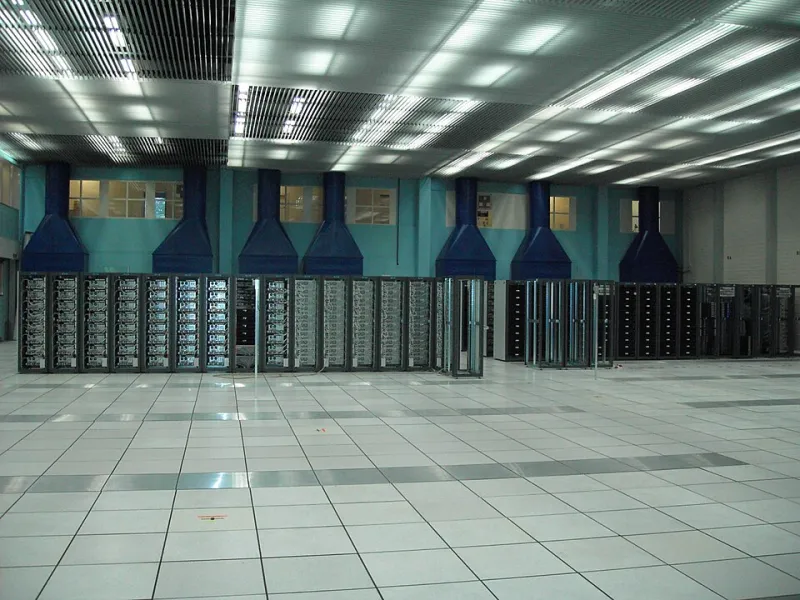
Photo: Faber, CC BY-SA 2.0, via Wikimedia Commons
Power has moved from the facilities team's problem to the data leader's agenda. Connection queues in the Thames Valley and west London remain measured in years rather than months, rack densities have climbed as accelerator capacity arrives, and non-commodity costs sit stubbornly above where they were at the start of the decade. For UK organisations running analytics and AI estates, electricity is now a design input rather than a line in someone else's budget.
The temptation is to treat this as a forcing function for wholesale cloud migration. That is the wrong reflex. Many workloads are poorly suited to a lift-and-shift, and moving them simply relocates the constraint while adding egress, latency and repatriation risk. What follows is a triage sequence that assumes the estate stays mixed — on-premise, colocated and cloud — for the foreseeable future.
The constraint is real, and it is uneven
National Energy System Operator planning work, Ofgem's connection reform agenda and the Capacity Market all point the same way: capacity exists, but not where demand is appearing and not always when it is needed. The practical consequences vary sharply by region. Sites in Scotland may find headroom that a west London campus cannot; urban colocation near dense fibre routes commands a premium that reflects scarcity of power as much as scarcity of space.
Add rising distribution and transmission charges, the Climate Change Levy on business energy use, and the density questions raised by AI inference and training, and the picture is one of local variation rather than a single national price signal.
Move one: profile workloads by tolerance, not by team
Most triage exercises begin with an org chart. They should begin with a tolerance profile. For each workload, record four attributes: latency tolerance, restartability, data gravity and regulatory locality.
In practice, a handful of categories emerge. Interactive dashboards need immediate responsiveness. Overnight transformation runs need completion by a deadline, not continuous availability. Model training is elastic and patient. Archival and back-office reporting is patient and rarely urgent. In most UK estates, the majority of compute hours sit in the patient categories — which is precisely where the flexibility lives.
Publish the profile. A workload with no stated tolerance will always be treated as urgent, and urgent workloads cannot be moved.
Move two: place by constraint, not by habit
Placement decisions are usually inherited. A warehouse sits where it sits because that is where the servers were in 2019. Revisit them against three constraints: power availability and cost at the site, latency budget between data and compute, and data residency expectations from regulators and customers.
For many organisations the answer is not relocation but rebalancing — the latency-sensitive serving layer stays put while training and large-scale batch work moves to where capacity is cheaper and available. Set an explicit latency budget per workload before debating location, or the discussion will be settled by whoever speaks loudest.
Move three: move time before you move location
Temporal shifting is the cheapest lever available and the most frequently overlooked. Half-hourly settlement periods and time-of-use tariffs create genuine price differentials across the day. Non-urgent batch work scheduled at four in the afternoon is a choice, not a requirement.
Alongside rescheduling, do the unglamorous efficiency work: incremental models instead of full refreshes, partition pruning, query governors, and automatic suspension of development environments outside working hours. A surprising volume of UK estate compute is idle capacity that nobody has switched off. Address that before commissioning new capacity.
Move four: put energy into the contract
Colocation and cloud agreements are often silent on the things that now drive cost. Insist on transparency of power pass-through, disclosure of power usage effectiveness and its measurement methodology, reserved capacity with defined notice periods, and clarity on burst arrangements.
Check that service level agreements cover power as well as availability. A guarantee of uptime is hollow if the site cannot secure the supply. Align price review dates to your own budget cycle so that increases land in a planning round rather than as a surprise. And ask what happens if the supplier's own energy strategy changes mid-term.
Move five: make sustainability reporting a by-product
Streamlined Energy and Carbon Reporting, ESOS obligations, TCFD-aligned disclosure and the spillover effects of EU rules on UK subsidiaries of European parents all require numbers that are painful to assemble retrospectively.
Tag workloads with cost centre, purpose and environment at the point of provisioning. Scope 2 emissions reporting then becomes a query rather than a project, and market-based versus location-based figures reconcile without a fortnight of spreadsheet archaeology. Category 1 purchased services under Scope 3 will need supplier data anyway — which is another reason to write reporting methodology into contracts.
A ninety-day sequence
Days one to thirty: complete the tolerance profile and publish it. Days thirty-one to sixty: benchmark the top ten workloads by annual energy cost and identify rescheduling candidates. Days sixty-one to ninety: open contract conversations, run one temporal-shifting pilot end to end, and introduce provisioning tags. Resist the urge to launch a transformation programme in parallel.
What to avoid
Do not present cloud migration as a sustainability strategy without evidence; the comparison depends entirely on regional grid intensity and utilisation. Do not buy carbon offsets in place of measurement. And do not let the exercise become a facilities project with a data appendix — the decisions that matter, about what runs where and when, belong to the people who understand the workloads.
The squeeze will not ease quickly. The organisations that cope will be those that treat power as a first-class constraint in architecture decisions, rather than an invoice that arrives after the design is fixed.